
Tuscany and Surroundings
Podere “La Ciabatta” has a great advantage: it is situated in the heart of Tuscany and very close to the charming little village of Casole d’Elsa, located on the historic Via Francigena. Equidistant from all the region’s scenic, cultural, artistic and gastronomic attractions, its unique feature is precisely its proximity to the places that have made Tuscany famous throughout the world.
CASOLE D’ELSA
It is a charming medieval village perched on a hill 418 metres above sea level in the beautiful countryside of the Province of Siena.
The landscape around Casole d’Elsa is truly breathtaking. On clear days, to the north you can see the Tuscan-Romagnolo Apennines; to the north-east, the Chianti hills; to the east, the Casentino mountains behind Arezzo and the Montagnola hills, beyond which lies Siena; to the south, we see the valley of the River Elsa, stretching as far as Monte Amiata in the distant south of Tuscany, and the Metalliferous Hills with the characteristic boron-bearing geysers of Larderello. To the west, we see the majesty of Volterra and the lush forests of Berignone.
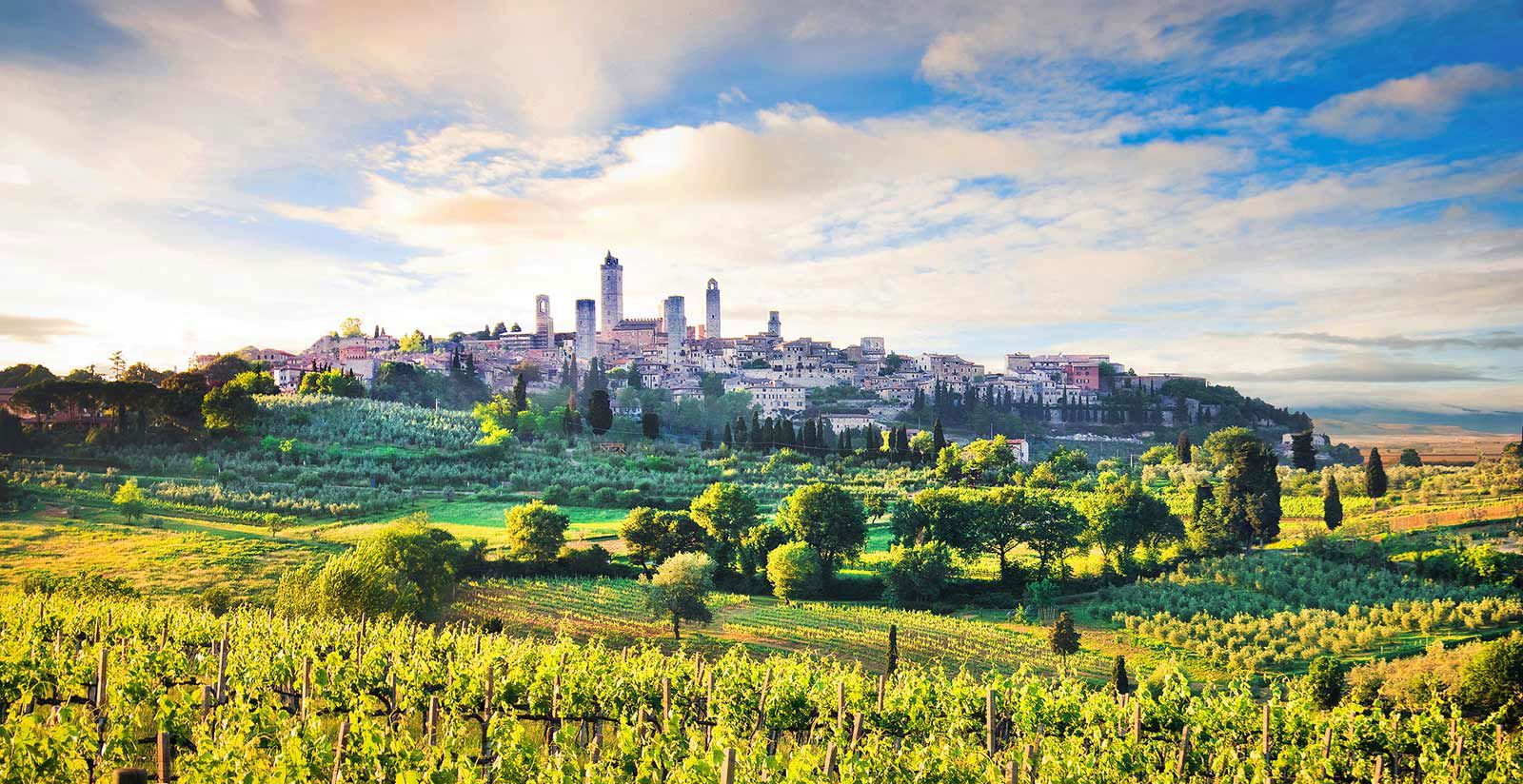
SAN GIMIGNANO
The site of a small Etruscan settlement, as evidenced by the numerous tombs and archaeological finds discovered in the area. The origins of San Gimignano date back to around the 10th century, when it was named after the Holy Bishop of Modena who, in the 6th century, defended the village from the hordes of Totila. The village is one of the finest and most authentic examples of medieval urban planning in the Tuscany region.
VOLTERRA
Of Etruscan origin. It is now renowned for its alabaster craftsmanship. The origins of Volterra are lost in the mists of history, when the ancient Villanovan site of the Val di Cecina became the powerful Velathri, one of the Lucomonies of the Etruscan Dodecapolis. There were many disputes in the medieval period with Pisa, Siena and Florence – at times allies, at times enemies – as well as wars with neighbouring San Gimignano and the fratricidal internal struggles between the Guelphs and Ghibellines. However, essentially (from 1361) Volterra was Guelph and loyal to Florence, sharing its fortunes right up to the unification of Italy.
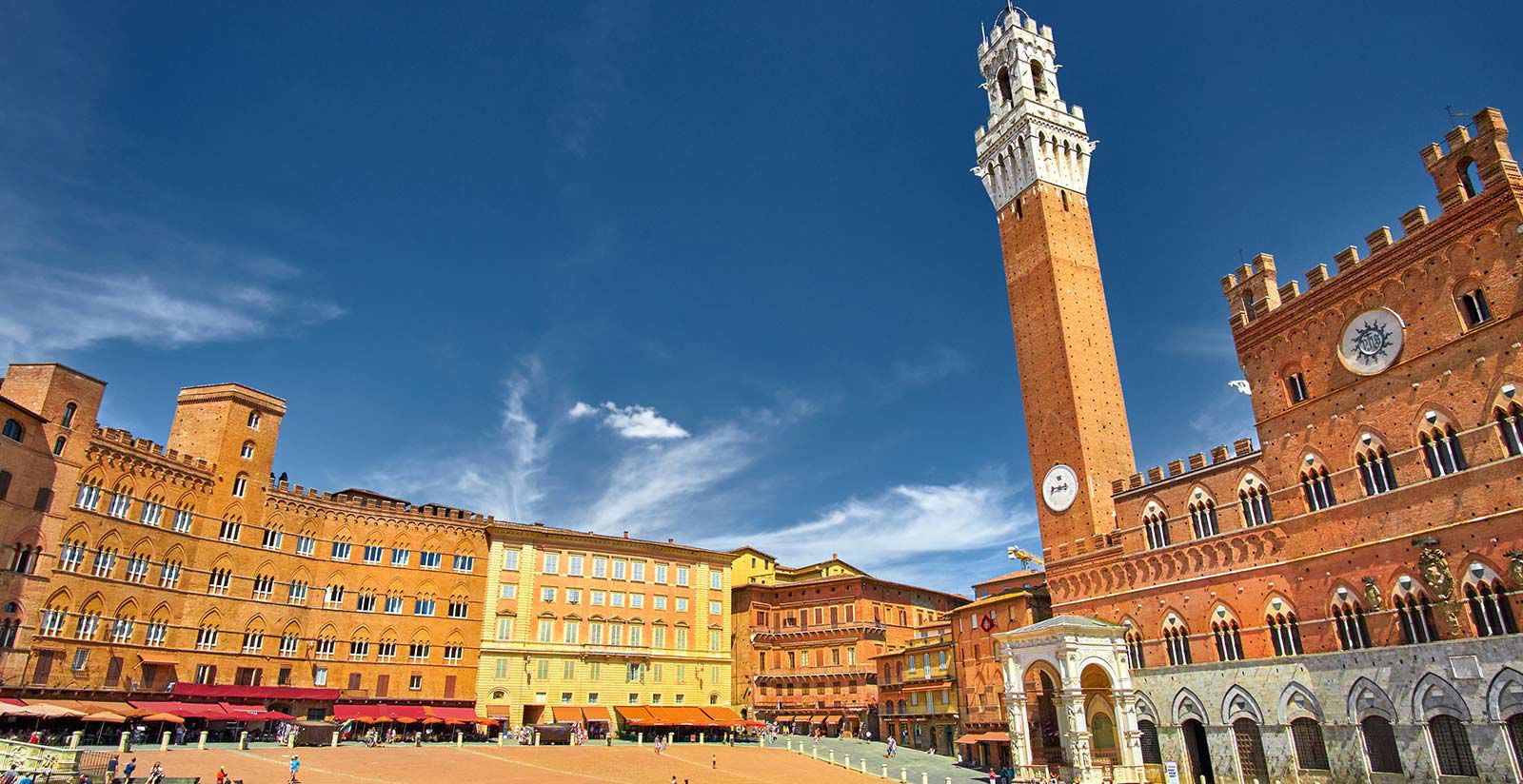
SIENA
A city of very ancient origins, Siena has preserved intact the charm of one of the most famous and evocative medieval centres in Tuscany. Resting on three hills, it is renowned for its extraordinary historical, artistic and cultural heritage, as well as for the famous Palio that enlivens Piazza del Campo twice a year. The origins of Siena are intertwined with legend and history, from Etruscan evidence to the Roman period and the great splendour achieved during the Middle Ages, when it became an important political, economic and artistic centre. Even today, the town preserves magnificent examples of Gothic architecture, narrow streets, historic palaces and churches that tell the story of the prestige and beauty of a unique city, capable of enchanting visitors from all over the world.


